
Air Source Heat Pump Reviews (UK Guide 2025): Costs, Performance, Pros & Cons


Contents
-
What is an Air Source Heat Pump?
-
How to Read Reviews
-
Running Costs & Savings
-
Performance: COP & SCOP
-
Noise Levels
-
Installation Quality
-
Grants & Finance
-
Brands & Models
-
Maintenance & Lifespan
-
Comparison Table
-
Buying Checklist
-
FAQs
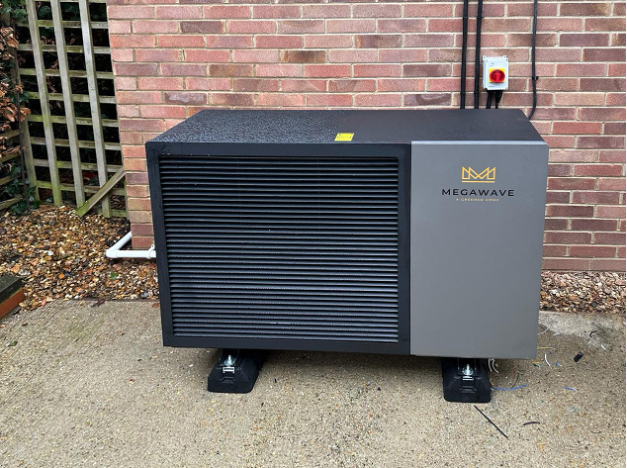
1) What is an Air Source Heat Pump?
An air source heat pump (ASHP) is a renewable heating system that captures heat from the outside air—even in cold UK winters—and upgrades it to provide central heating and hot water. Instead of burning fossil fuels, it works like a reverse refrigerator, transferring heat using a refrigerant cycle powered by electricity.
On average, a well-designed ASHP will deliver 2.5–4.0 units of heat energy for every unit of electricity consumed, which means households can often reduce carbon emissions and cut heating bills compared to oil, LPG, or electric resistance systems.
ASHPs are versatile: they can connect to radiators, underfloor heating, or a hot water cylinder. Because they run most efficiently at low flow temperatures (40–50 °C), homes with good insulation and properly sized emitters tend to see the best results.
This efficiency, combined with government grants and 0% VAT on installation, is why so many UK homeowners are actively researching air source heat pump reviews before making the switch.
2) How to Read Reviews
Online forums and customer reviews are valuable, but not all are equally useful. To make sense of them, pay attention to context—the details behind the reviewer’s experience.
-
Property type & insulation: A detached new-build performs very differently from a draughty terrace.
-
System design and heat loss survey: Radiators and emitters must be correctly sized for low flow temps.
-
Installer competence: Many bad reviews are due to poor installation, not the heat pump itself.
-
Controls & user setup: Good installs are “set and forget”; bad ones leave users constantly adjusting.
-
Electric tariff: Smart/off-peak tariffs can make a big difference in running costs.
The most useful air source heat pump reviews always explain property type, design, and installer—not just the brand name.
3) Running Costs & Savings
Annual costs depend on heat demand, SCOP, and electricity rate.
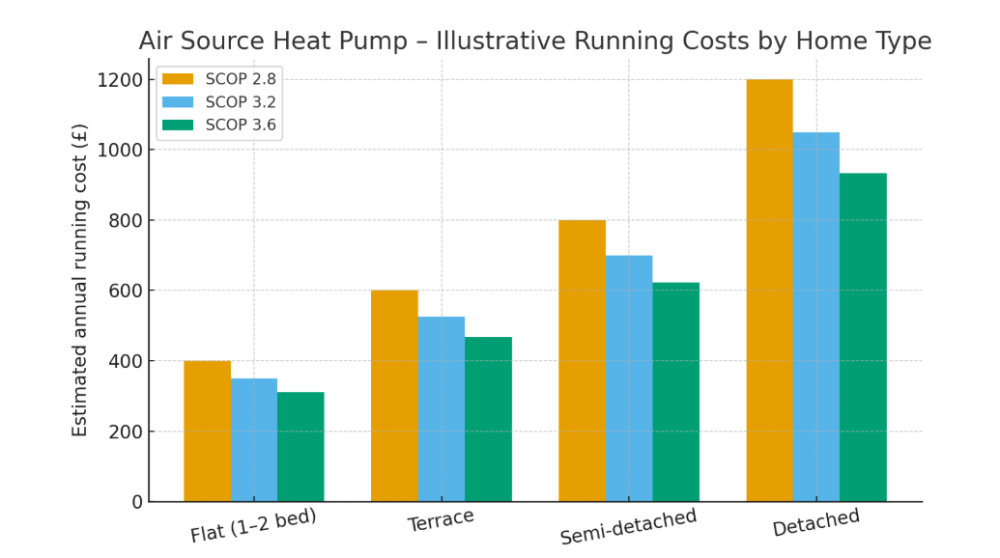
Illustrative chart: running costs at 28p/kWh for different SCOP scenarios.
4) Performance: COP & SCOP (Extended Guide)
COP (Coefficient of Performance) is the ratio of heat output to electrical input at a single test point.
-
Formula: COP = Heat Output (kW) ÷ Electrical Input (kW).
-
You’ll see test points written like A7/W35 (air 7 °C, water 35 °C). A modern unit might show COP ≈ 4.0–5.0 at A7/W35, but only 2.0–3.0 at A-7/W55 because colder air and hotter water make the job harder.
-
Use COP to compare models at the same conditions; it’s not your all-season efficiency.
SCOP (Seasonal COP) estimates average efficiency across the whole heating season.
-
It blends many outdoor temperatures (“climate bins”) and water temperatures, plus standby and defrost losses.
-
It’s a better indicator of bills than COP because it reflects mixed UK weather.
-
Real-world SCOP depends heavily on your design flow temperature, emitters, controls, and installer setup.
Design Flow Temperature (the water temperature your system is designed to run at) is the biggest lever.
-
As a rule of thumb, every +5 °C increase in flow temperature can knock ~5–10% off efficiency.
-
Aim for 40–50 °C for space heating where possible (well-sized radiators or UFH).
-
Good installers design radiators/UFH around your local design outdoor temperature (often around –3 °C to –5 °C in much of the UK) so the pump can hold room temperature without pushing water temps too high.
Defrost Strategy matters in damp, cold weather (typically –3 °C to +5 °C).
-
Outdoor coils frost; the unit briefly reverses to melt ice. That uses energy and can cause short comfort dips if poorly set up.
-
Better controllers minimise defrost duration/frequency and coordinate fan/compressor speeds.
-
Some models have drain-pan heaters; placement and drainage help reduce ice build-up time and heater runtime.
Modulation & Cycling affect both comfort and SCOP.
-
Look for a broad turndown ratio (e.g., 1:7 to 1:10). That lets the pump run steadily in mild weather.
-
Frequent start/stop cycles raise power spikes and cut efficiency. A healthy target is under ~3 starts/hour during steady weather.
-
Avoid oversizing the unit; “bigger” isn’t better if it can’t throttle low enough.
Controls: Weather Compensation (WC) is essential for efficiency.
-
WC automatically lowers flow temperature when it’s mild outside and raises it during cold snaps.
-
Example: target 45 °C flow at –3 °C outside, but 30–35 °C at +12 °C.
-
Start with the installer’s recommended curve, then nudge slope and offset after the first week or two for comfort and lowest kWh.
Domestic Hot Water (DHW) vs Space Heating
-
DHW needs higher water temperatures than space heating, so COP is lower during cylinder reheats.
-
Schedule DHW reheats at off-peak times if you’re on a smart tariff.
-
Legionella pasteurisation (e.g., 60 °C) should be weekly and brief; daily high-temp cycles will drag down SCOP.
Refrigerant & High-Temp Models
-
R290 (propane) units often hold capacity and COP better at higher flow temps than some R32/R410A units, useful for radiator-led retrofits.
-
Still, the golden rule remains: lower flow temp = better SCOP, whatever the refrigerant.
Reading Manufacturer Data Sheets
-
Compare like-for-like points: A7/W35, A2/W45, A-7/W55.
-
Look at both capacity (kW) and COP—a unit that keeps capacity in the cold may avoid immersion/backup use.
-
Check the minimum output (low-end modulation) for shoulder seasons to prevent cycling.
What “good” looks like in UK homes (rough guide; your property may differ):
-
UFH or very large rads (35–45 °C flow): SCOP 3.5–4.5
-
Well-sized low-temp radiators (40–50 °C): SCOP 3.0–3.8
-
Legacy/high-temp radiators (55–60 °C): SCOP 2.5–3.2
If you’re below these ranges, look for cycling, over-high flow temps, blocked filters/strainers, or a too-steep WC curve.
Simple worked example (illustrative):
-
Average winter heat demand: 10,000 kWh space heating.
-
Achieved SCOP 3.2 → ~3,125 kWh electricity for heating.
-
At 28p/kWh, that’s ~£875 for space heating (DHW extra).
Improve SCOP to 3.6 by lowering flow temps and tuning WC → ~2,780 kWh → ~£778. Small tuning, real savings.
Quick diagnostics you can do
-
Log flow/return temps, outdoor temp, compressor hours, starts/hour, and electricity kWh.
-
If starts/hour > 3 in mild weather, reduce curve slope, widen TRV openings, or adjust minimum flow to lengthen run times.
-
If rooms are cold at design weather, add emitter area or accept a slightly higher curve (knowing SCOP will drop a bit).
-
Keep filters/strainers clean; low flow triggers cycling and poor COP.
-
Check ΔT (flow–return) is sensible (often 5–10 K for many systems).
Upgrade levers (from highest to lower impact)
-
Lower flow temperature (bigger rads/UFH, balance circuits).
-
Tune weather compensation (slope/offset).
-
Reduce cycling (open TRVs, correct modulation limits, avoid aggressive on/off thermostats).
-
Schedule DHW to off-peak; keep pasteurisation short/weekly.
-
Site the outdoor unit for clear airflow and clean drainage to reduce defrost penalties.
-
Firmware & monitoring—let installers optimise remotely after a week of data.
Quick tip: Ask your installer for the commissioning sheet (design flow temps, pump curves, WC settings) and enable remote monitoring if available. A quick optimisation visit after the first cold spell often unlocks a noticeable bump in SCOP and comfort.
5) Noise Levels
Modern heat pumps are usually quiet when installed properly. Noise problems come from placement and mounting, not the brand.
-
Mounting: Use anti-vibration feet or ground frames.
-
Clearances: Maintain proper intake/exhaust distances.
-
Airflow Path: Avoid pointing fans at hard boundaries.
-
Defrost Behaviour: Short “whoosh” sounds in winter are normal.
-
Quiet Modes: Night-time modes help in residential areas.
Video guide available: Heat pump noise & placement tips (YouTube).
6) Installation Quality (Extended Guide)
The difference between great and poor outcomes is almost always installation quality. A mid-range heat pump installed expertly can outperform a premium unit installed poorly.
Survey & Design (before anyone quotes):
-
Room-by-room heat loss using measured dimensions, fabric U-values, ventilation assumptions, and local design outdoor temperature (often around –3 to –5 °C in much of the UK).
-
Emitter schedule listing each radiator/UFH loop, design flow temperature, target room temp, required output at that flow, and any upgrades.
-
Pipe runs & sizing planned for minimum flow rates and acceptable pressure drops.
-
Cylinder selection: coil area and pressure drop must match the heat pump’s DHW output; specify reheat time and weekly pasteurisation strategy.
-
Noise modelling & siting: boundary sound check, clearances for intake/exhaust, and an airflow path that avoids recirculation.
Hydraulics (quiet, clean, stable):
-
Clean system water: pre-flush legacy circuits, fit a magnetic/dirt separator and a micro-bubble air separator; dose inhibitor (and glycol only if required).
-
Direct vs header/buffer: prefer direct connection where the pump can maintain flow; use low-loss header/buffer only when hydraulically necessary (multiple zones with varied flows, or minimum flow can’t be guaranteed).
-
ΔT and flow: design around sensible ΔT (5–10 K); verify actual L/min during commissioning.
-
Valves & protection: auto air vents at high points, service valves, strainers on returns, condensate/defrost drain with fall and, if needed, trace heat.
-
Mounting: solid pad or ground frame with anti-vibration feet; avoid flimsy wall brackets that transmit resonance.
Controls & Commissioning (where efficiency is won):
-
Weather Compensation (WC) enabled from day one. Start with installer’s curve; fine-tune slope/offset after a few days.
-
Modulation limits set to reduce cycling; aim for <≈3 starts/hour in steady weather.
-
Room controls: a single, well-placed sensor or stat to trim WC; avoid aggressive on/off thermostats that fight the curve.
-
Data captured: outdoor temp, flow/return temps, ΔT, actual flows (L/min), pump curves, static pressure, DHW reheat time/temps.
Handover (make it easy to live with):
-
Commissioning sheet with the final WC settings, design flow temp at design weather, pump curve, ΔT, measured flows, DHW schedule, pasteurisation plan.
-
User briefing: how to nudge the WC curve, when to run DHW, what “quiet/night” mode does, and how to check filters.
-
Documentation: MCS paperwork (if applicable), warranties, service plan, wiring/hydraulic schematics, and parts list.
Aftercare (protect SCOP and comfort):
-
Annual service: clean/replace strainers and filters, verify inhibitor/glycol, inspect electrics, check drainage/ice paths, update firmware.
-
First-winter optimisation: a short revisit or remote check to trim the curve and confirm stable run patterns.
-
Remote monitoring (if available) to spot cycling, blocked filters, or drifting setpoints early.
Red flags (time to ask questions):
-
No heat-loss calculation or emitter schedule in the quote.
-
“We always fit a buffer/header” without hydraulic justification.
-
Controls left on fixed flow temperature; WC disabled.
-
Wall brackets on a hollow/echo-y wall with no anti-vibration strategy.
-
No commissioning sheet or user briefing at handover.
Quick vetting questions:
-
“Can I see two recent local installs with their commissioning sheets?”
-
“What’s the design flow temp and expected SCOP for my home?”
-
“How will you guarantee minimum flow and low cycling on mild days?”
-
“What’s your plan for DHW pasteurisation and scheduling?”
7) Grants & Finance (Extended Guide)
Grants and smart financing can significantly improve payback—but eligibility and rules change, so always check the latest details before ordering.
Grants (overview):
-
Boiler Upgrade Scheme (BUS) in England & Wales supports eligible heat pump installs via an MCS-certified installer. The installer typically applies on your behalf and deducts the grant from the invoice if approved.
-
Schemes in Scotland and Northern Ireland differ—ask your installer about current local options.
-
Eligibility basics often include: MCS installer, suitable system design, and property criteria (EPC/insulation recommendations may apply). Keep an eye on current rules.
VAT:
-
Domestic heat pump installations currently benefit from 0% VAT on installation in the UK (subject to government policy—verify current status).
Practical steps to secure support:
-
Pick an MCS-accredited installer and request a heat-loss report, emitter schedule, and SCOP estimate in the quote.
-
Check EPC status and insulation recommendations; address obvious gaps (e.g., loft/cavity) if required or provide valid exemptions.
-
DNO notification/approval (G98/G99) handled by the installer—ensure this is included in their process.
-
Grant application submitted by the installer; get written confirmation of the deducted amount and timelines.
-
Keep paperwork: MCS certificate, warranties, commissioning sheet—often needed for grant evidence and future resale.
Finance & payment structure:
-
Many households combine grants with a fixed-term finance plan to spread upfront costs.
-
Ask for an itemised quote separating: equipment, labour, electrical works, cylinder/emitters, controls, and optional upgrades (PV, battery, TRVs, insulation).
-
Compare APR, fees, early-repayment options, and any penalties; ensure the grant deduction is reflected before financing.
-
Consider whole-home economics: if you’ll add PV/battery later, choose controls that can schedule DHW or pre-heat when power is cheap or self-generated.
Tariffs (cut running costs):
-
Time-of-use/off-peak tariffs can lower bills—schedule DHW reheats and any pre-heat into cheaper periods.
-
Pair tariffs with weather compensation (lower flow temps in mild weather) to boost SCOP.
-
If you have (or plan) PV, consider daytime DHW reheats to soak up surplus generation in summer.
What to ask your installer about money:
-
“Will you handle the grant application and show it as a deduction on the invoice?”
-
“What’s my projected SCOP and annual kWh for space heating and DHW?”
-
“Which tariffs or schedules do you recommend for my usage pattern?”
-
“Can the controls integrate with smart tariffs or PV/battery timing?”
Reminder: Grant values, VAT rules, and eligibility criteria can change—verify the latest guidance right before you sign.
8) Brands & Models
When comparing models, consider:
-
Refrigerant type (e.g., R290)
-
Modulation range (turndown)
-
Controls ecosystem (weather comp, firmware updates, monitoring)
-
Aftercare and support availability
9) Maintenance & Lifespan
Most heat pumps last 15–20 years with proper care.
Annual service should include:
-
Cleaning/replacing filters
-
Checking system pressure, glycol, inhibitors
-
Outdoor coil cleaning
-
Firmware updates and re-tuning controls
10) Comparison Table
| Factor | Good Reviews | Poor Reviews |
|---|---|---|
| Comfort | Stable 20–21 °C, minimal cycling | Temperature swings, frequent cycling |
| Costs | Low with 40–50 °C flow temps + off-peak tariffs | High bills from poor design |
| Noise | Quiet, anti-vibration mounts, night mode | Resonance, poor siting |
| Hot water | Correctly sized cylinder, efficient reheats | Long reheats, daily high-temp cycles |
| Aftercare | Clear commissioning, good optimisation | Poor support, no guidance |
11) Buying Checklist
-
Room-by-room heat loss survey.
-
Radiators/UFH designed for ≤ 50 °C.
-
Clean circuits, correct hydraulics.
-
Weather compensation enabled.
-
Correctly sized cylinder/coil.
-
Noise modelling and good siting.
-
Smart/off-peak tariff plan.
-
Full paperwork + SCOP estimate.
-
Annual service and optimisation.
-
Clear options for emitters and cylinders.
12) FAQs
What do UK homeowners praise?
Quiet operation, steady comfort, low bills.
What causes negative reviews?
Poor design, high flow temps, lack of guidance.
Will it work in older homes?
Yes, with proper survey and insulation.
How do I compare models?
Look at SCOP, refrigerant, noise, controls, aftercare.
How big should my heat pump be?
Correctly sized to heat loss, not oversized.
What about grants & VAT?
As of 2025: BUS grant + 0% VAT.
About the Author

Related Posts
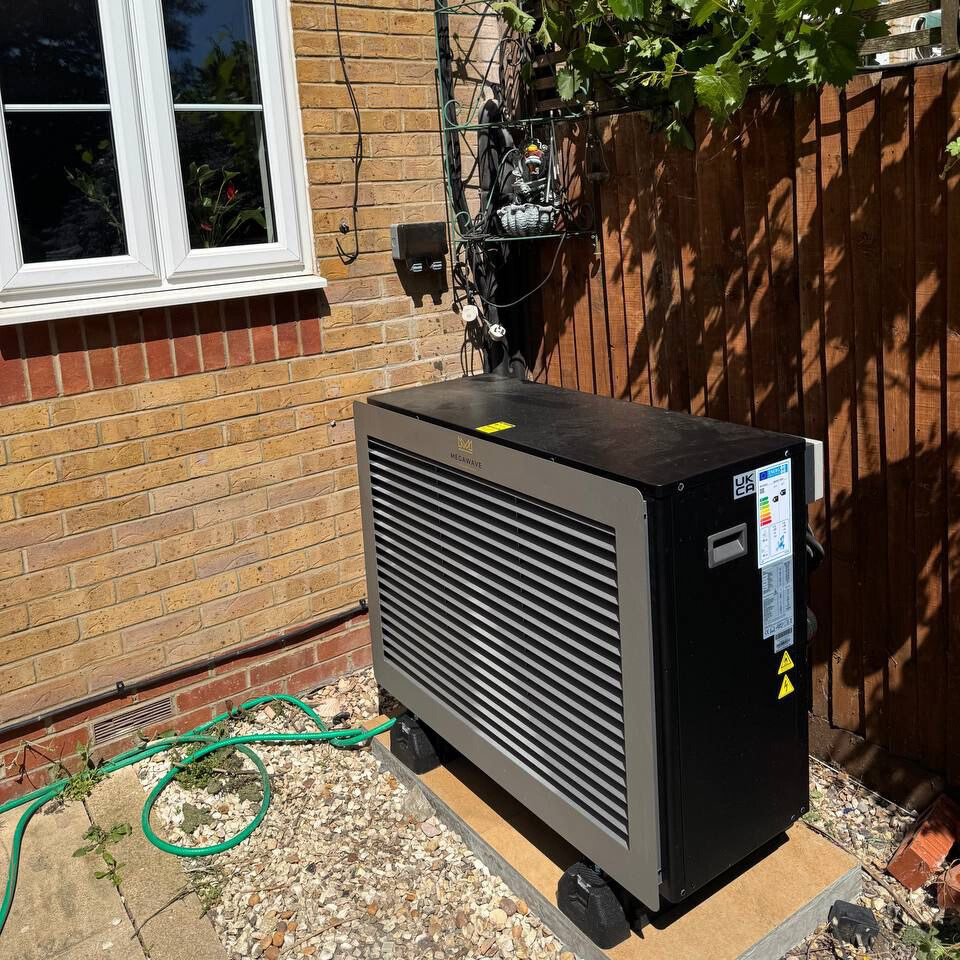
About Air Source Heat Pumps: Complete Guide 2025
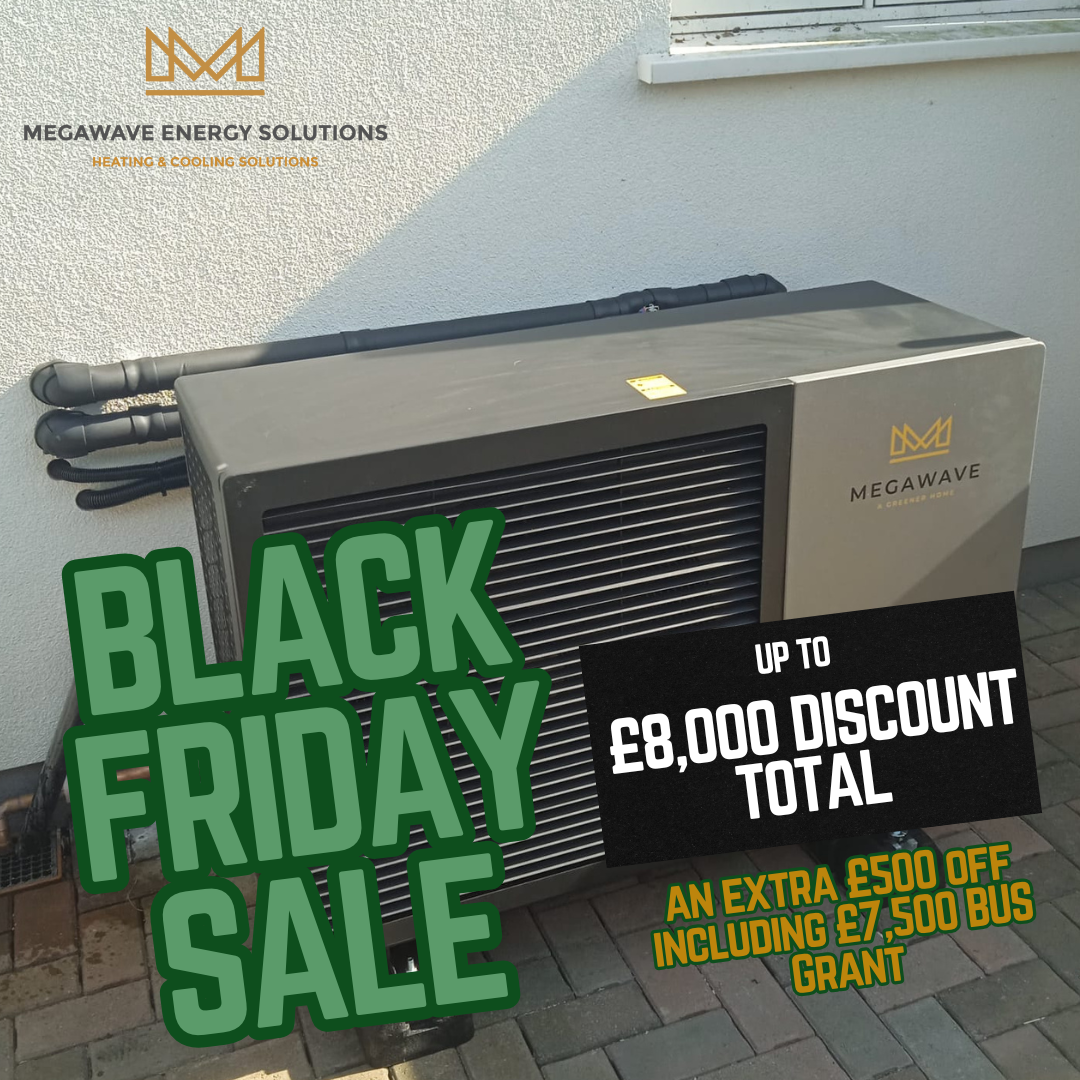
Black Friday Heat Pump Sale: Save Up to £8,000 on Your Installation
