
About Air Source Heat Pumps: Complete Guide 2025

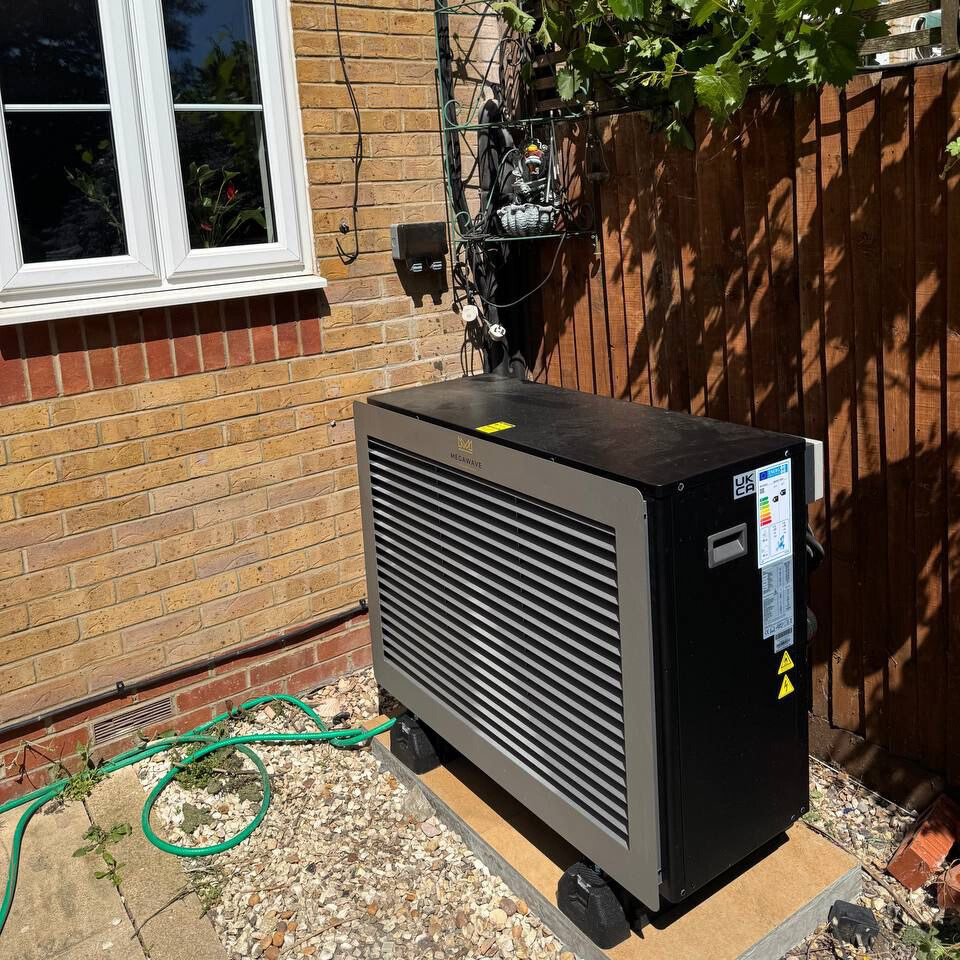
This guide explains everything you need to know about air source heat pumps, including performance, installation, government grants, and a real-world Megawave case study.
What Is an Air Source Heat Pump?
An air source heat pump extracts thermal energy from outside air—even in cold weather—and uses it to heat water for your central heating and hot water systems. Unlike gas boilers, ASHPs don’t burn fossil fuels directly, meaning they lower your home’s carbon footprint while reducing heating bills. They are highly efficient, often generating 3–5 times more heat energy than the electricity they consume.
Why Choose an Air Source Heat Pump?
-
Lower carbon footprint: Reduces reliance on fossil fuels.
-
Cheaper running costs: Especially when combined with solar PV and smart tariffs.
-
Government grants: Support schemes like the Boiler Upgrade Scheme (BUS) offer £7,500 for eligible homes.
-
Future proof: Supports UK’s Net Zero targets.
-
Comfort: Works with radiators, underfloor heating, and fan coil units.
Megawave Air Source Heat Pumps – Case Study
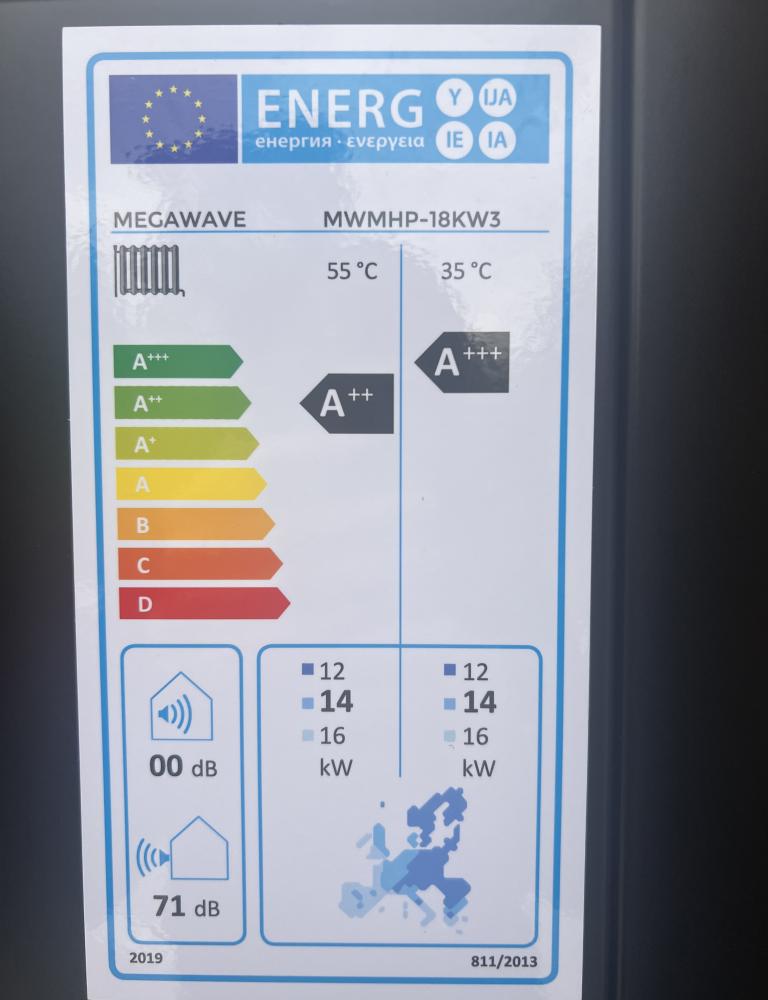
At Megawave Energy, we provide innovative, cost-efficient energy solutions. Let’s explore a recent case study of an 18kW Megawave heat pump installed in a detached home in South London.
Step 1: Site Survey
A certified surveyor conducted a full MCS (Microgeneration Certification Scheme) heat loss calculation, measuring dimensions, insulation levels, and ventilation. This ensures the pump size matches the property’s heating demand.
Step 2: Installation
The 18kW ASHP was positioned outdoors, at least 1 meter from the property boundary, elevated for airflow. Flow and return pipes connected seamlessly to upgraded radiators and underfloor heating. A 300-litre cylinder tank was installed indoors for hot water storage.
Step 3: Performance
The Seasonal Coefficient of Performance (SCOP) was measured at:
-
4.6 at 35°C outlet water temperature
-
3.4 at 55°C outlet water temperature
This makes the system 340%–460% more efficient than a standard gas boiler.
Step 4: Comfort & Noise Levels
Noise concerns are common, but modern ASHPs operate quietly. The Megawave system produces less than 38dB when active—quieter than a fridge hum.
Step 5: Fan Coil Units (FCUs)
The homeowner requested cooling as well as heating. Fan Coil Units were added, providing efficient heating in winter and cooling in summer. Units are available as freestanding or concealed designs to suit interior layouts.
Customer Feedback
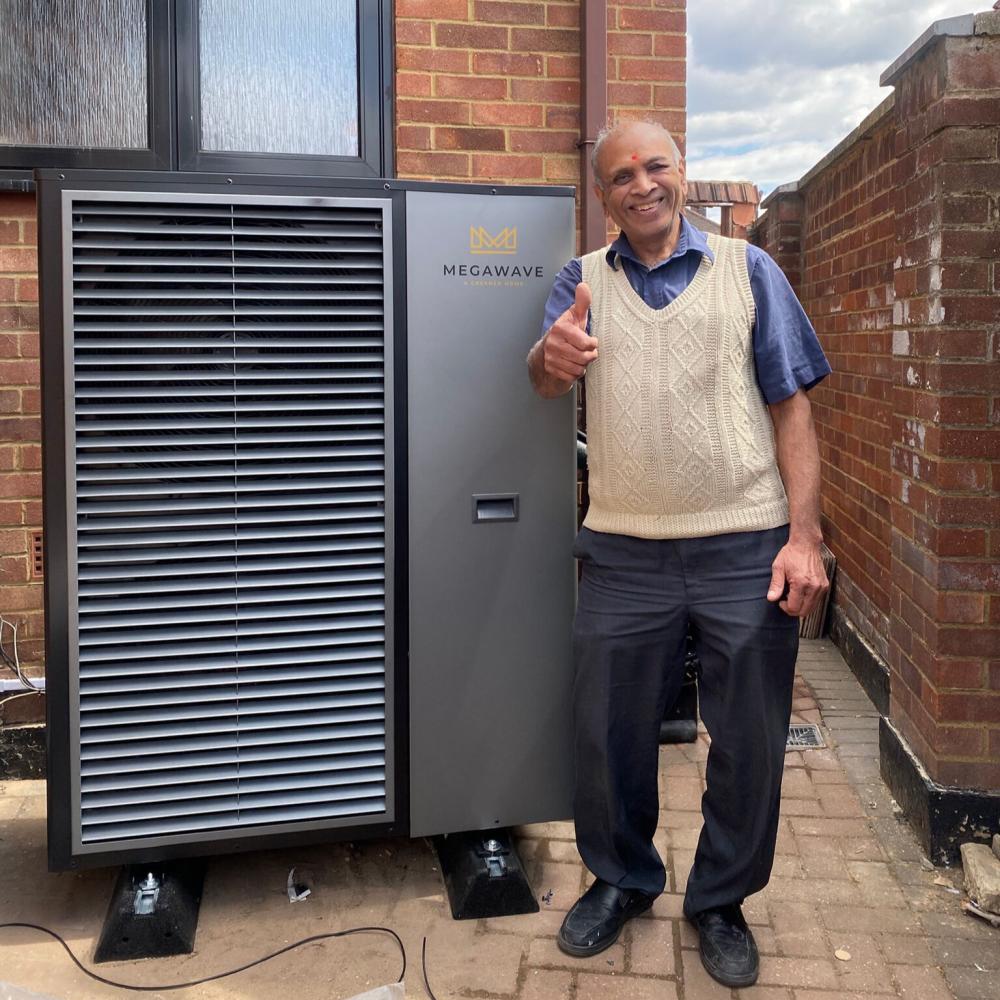
“The Megawave ASHP has exceeded expectations. The system is efficient, quiet, and eco-friendly. Our energy bills have dropped, and the aftercare support was excellent.”
— Nick P., South London
Government Support: Boiler Upgrade Scheme (BUS)
One of the biggest barriers for homeowners who are considering switching to renewable heating is the upfront installation cost. Unlike a traditional gas boiler, an air source heat pump involves more equipment, more labour, and sometimes additional home improvements to maximise efficiency. To address this, the UK government has introduced financial incentives to make the transition affordable and attractive.
The Boiler Upgrade Scheme (BUS) is the flagship support programme, designed to encourage households in England and Wales to adopt low-carbon heating solutions such as air source heat pumps (ASHPs) and ground source heat pumps. Through the scheme, eligible domestic customers can claim a grant of £7,500 toward the cost of replacing an existing fossil fuel heating system—such as gas, oil, or direct electric—with a modern, energy-efficient heat pump. This is a significant contribution, as it can cover a large portion of the upfront cost, and in some cases, make heat pumps cheaper than replacing an old boiler with a new one.
Eligibility Requirements
To qualify for the Boiler Upgrade Scheme, a property must:
-
Be a domestic or small non-domestic building located in England or Wales.
-
Have a valid Energy Performance Certificate (EPC) that shows the property meets minimum insulation standards. Typically, this means cavity wall insulation where appropriate and at least 270mm of loft insulation.
-
Replace an existing fossil fuel system (gas, oil, or coal). Homes currently connected to the gas grid are still eligible.
-
Not be a new build (unless it is a self-build project).
Solid wall properties without cavity insulation are not excluded, which means many older homes can still qualify as long as other insulation measures are in place.
Why Insulation Matters
The government requires insulation upgrades as part of BUS eligibility because air source heat pumps work most efficiently in well-insulated homes. By reducing heat loss through walls, floors, and roofs, the system doesn’t need to work as hard to maintain comfortable indoor temperatures, lowering running costs and ensuring the pump delivers its advertised performance.
How Megawave Helps Homeowners
At Megawave Energy, we know the paperwork and compliance side of things can feel overwhelming. That’s why we provide a complete support service as part of our design and installation package. Our team:
-
Conducts a full home survey to assess current insulation levels and recommend improvements.
-
Organises any upgrades needed to meet BUS requirements (such as loft insulation or cavity wall filling).
-
Guides homeowners through the EPC certification process to prove eligibility.
-
Handles the grant application on behalf of the customer, ensuring all documentation is correct.
This means homeowners can focus on choosing the right air source heat pump system for their property while Megawave takes care of the compliance and paperwork.
Impact on Affordability
By combining the £7,500 BUS grant with other financing options—such as green energy loans, low-interest home improvement plans, or pairing with solar PV to cut electricity bills—many households find that switching to an air source heat pump is not only financially feasible but also cost-saving in the long run. In fact, depending on energy usage and tariff selection, many customers report monthly bills lower than what they previously paid for gas.
Future of Government Support
The Boiler Upgrade Scheme is currently scheduled to run until at least 2028, with the government hinting at further incentives as part of its Net Zero 2050 roadmap. This means there has never been a better time to invest in about air source heat pumps, as financial aid is available now, and early adopters will benefit from both grants and long-term savings on energy costs.
Technical Benefits of Megawave ASHPs
When choosing an air source heat pump, homeowners often focus on upfront cost and running efficiency. However, the technical design of the system itself plays a huge role in long-term performance, comfort, and savings. Megawave ASHPs are engineered with a wide range of features that make them versatile, environmentally friendly, and future-ready.
Wide Range of Sizes: 6–24 kW
Megawave offers ASHP models ranging from 6 kW to 24 kW, covering everything from small flats to large detached homes. A properly sized heat pump is crucial—too small and it will struggle to heat your home, too large and it may cycle inefficiently. By offering multiple output levels, Megawave ensures that each system is matched perfectly to the property’s heat demand as determined by an MCS heat loss survey. This flexibility makes Megawave units suitable for both domestic and small commercial projects.
Single and Three-Phase Options
Another key technical advantage is the availability of both single-phase and three-phase units. Most UK homes are supplied with single-phase electricity, making those models ideal for standard installations. However, larger homes, new builds, or properties with heavier electrical demand may benefit from a three-phase supply, which delivers greater stability and efficiency. Megawave provides both, ensuring compatibility with a wide range of electrical infrastructures.
Low Global Warming Potential (GWP) Refrigerants
Refrigerants are at the heart of how air source heat pumps work, transferring energy from the outside air into your home’s heating system. Traditional refrigerants can have a high environmental impact if released. That’s why Megawave systems use low Global Warming Potential (GWP) refrigerants, which significantly reduce greenhouse gas emissions compared to older models. This aligns with the UK’s sustainability goals and helps homeowners feel confident they are making a long-term environmentally friendly choice.
Integration with Solar PV, Inverters, and Battery Storage
Megawave ASHPs are designed to integrate seamlessly with renewable energy systems. By pairing a heat pump with solar panels, homeowners can generate their own electricity during the day and use it to power the heat pump. Adding a battery storage system and smart inverter creates even more savings by storing excess energy for use during the evening or overnight. This setup not only lowers energy bills but also reduces reliance on the grid, giving households greater energy independence.
Ultra-Low Noise Levels
One of the most common concerns about air source heat pumps is noise. Unlike older models or poorly installed systems, Megawave ASHPs are designed for quiet operation, producing sound levels as low as 38 decibels—equivalent to a quiet library or soft background conversation. Because the fan and compressor do not run constantly, the pump cycles on and off depending on demand, further minimising noise disturbance. This makes them suitable even for urban or suburban homes with close neighbors.
Designed for the Future
All these technical benefits mean that Megawave ASHPs are not just efficient for today—they are future-proof. With increasing demand for electrification, integration with smart home systems, and evolving government standards, Megawave pumps are engineered to remain compliant, efficient, and reliable for decades to come.
Comparison: ASHP vs Gas Boiler
| Feature | Air Source Heat Pump | Gas Boiler |
|---|---|---|
| Efficiency | 300–500% | 90–95% |
| Carbon Emissions | Low | High |
| Fuel Source | Electricity | Gas |
| Maintenance | Low | Medium |
| Grants | £7,500 BUS | None |
Buying Checklist
-
Check insulation levels (cavity/loft insulation recommended).
-
Request an MCS survey for heat loss calculations.
-
Ensure adequate outdoor space for the ASHP unit.
-
Upgrade radiators or underfloor heating if needed.
-
Apply for the BUS grant with installer support.
-
Consider pairing with solar panels for maximum savings.
Maintenance & Lifespan
Like any heating system, an air source heat pump performs best when it is properly maintained. One of the advantages of ASHPs compared to traditional gas or oil boilers is that they require less frequent intervention and fewer replacement parts, but regular servicing is still essential to keep efficiency high and ensure a long lifespan.
Lifespan of Air Source Heat Pumps
With the right care, most modern ASHPs have a service life of 15–20 years, and in many cases even longer. This is comparable to or better than a gas boiler, especially when you consider that there is no combustion process inside the pump, which reduces wear and tear. The actual lifespan depends on factors such as:
-
Installation quality: A properly designed and installed system will naturally last longer.
-
Usage patterns: Systems working harder in poorly insulated homes may experience more strain.
-
Servicing schedule: Regular check-ups extend equipment life.
Annual Servicing
Most manufacturers, including Megawave, recommend an annual service carried out by a qualified engineer. A typical maintenance visit includes:
-
Checking refrigerant levels to ensure there are no leaks and that the system is running at peak efficiency.
-
Inspecting filters and coils to remove any dirt, dust, or blockages that could reduce airflow.
-
Testing system pressure and flow rates to confirm the pump is delivering the correct performance.
-
Electrical inspections of the wiring, sensors, and safety components.
-
Software or firmware updates to the system controls, where applicable.
These routine checks not only improve efficiency but also reduce the risk of unexpected breakdowns during winter.
Remote Monitoring
One of the innovations offered by Megawave Energy is optional remote monitoring. This allows the system to transmit performance data back to engineers, meaning any small issues can be identified before they become major problems. For homeowners, this provides reassurance that the system is always running at optimal efficiency without waiting for a fault to appear.
Repairs and Reliability
While ASHPs are generally reliable, small components such as fans or sensors may occasionally require replacement over the system’s lifetime. However, since there are no burners, flues, or combustion chambers, there are fewer moving parts compared to a gas boiler, which reduces the likelihood of major faults.
Cost of Maintenance
The cost of servicing an air source heat pump is usually lower than that of a boiler, often ranging from £150–£250 per year depending on the system size and provider. When you factor in the savings on energy bills and the longevity of the equipment, ASHPs prove to be a cost-effective heating solution in the long term.
Warranty and Aftercare
Megawave offers comprehensive aftercare packages that include annual servicing, extended warranties, and priority support. This ensures homeowners have peace of mind, knowing that both the performance and lifespan of their heat pump are fully protected.
The Bottom Line
With annual servicing and occasional component checks, Megawave ASHPs are built to deliver at least two decades of reliable, low-carbon heating. For households looking to learn more about air source heat pumps, the low maintenance requirements and long lifespan make them an excellent investment for the future.
Frequently Asked Questions About Air Source Heat Pumps
1. Do air source heat pumps work in cold UK winters?
Yes. Modern ASHPs can operate efficiently even at temperatures as low as -15°C, making them suitable for the UK climate.
2. How much space do I need for installation?
Units should be placed outdoors with at least 1 meter clearance from boundaries for proper airflow.
3. Are ASHPs noisy?
No. They produce around 35–40dB—comparable to a quiet library.
4. Can I combine ASHPs with solar panels?
Absolutely. ASHPs plus solar PV is a powerful combination for reducing energy bills and emissions.
5. How long before I see savings?
Most households notice reduced heating bills immediately, with full ROI within 7–10 years depending on usage and tariffs.
About the Author

Related Posts

Air Source Heat Pump Reviews (UK Guide 2025): Costs, Performance, Pros & Cons
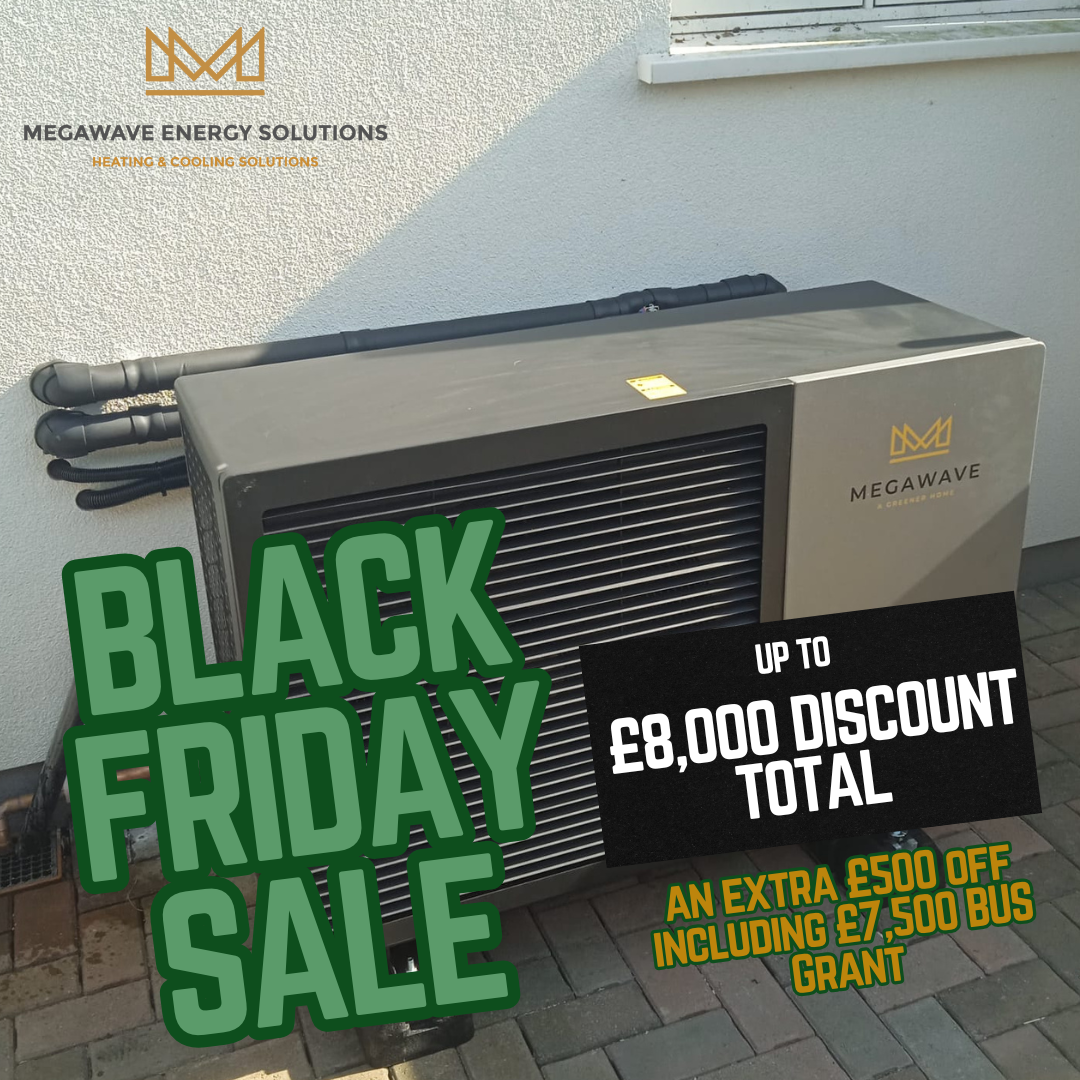
Black Friday Heat Pump Sale: Save Up to £8,000 on Your Installation
